FIND YOUR CHARGER
Which charger fits your car?
Pick your car, we show you the right charger.


Pick your car, we show you the right charger.
Install it once in your garage and wake up to a full battery. Fast, smart, and set for years.
Shop the wall charger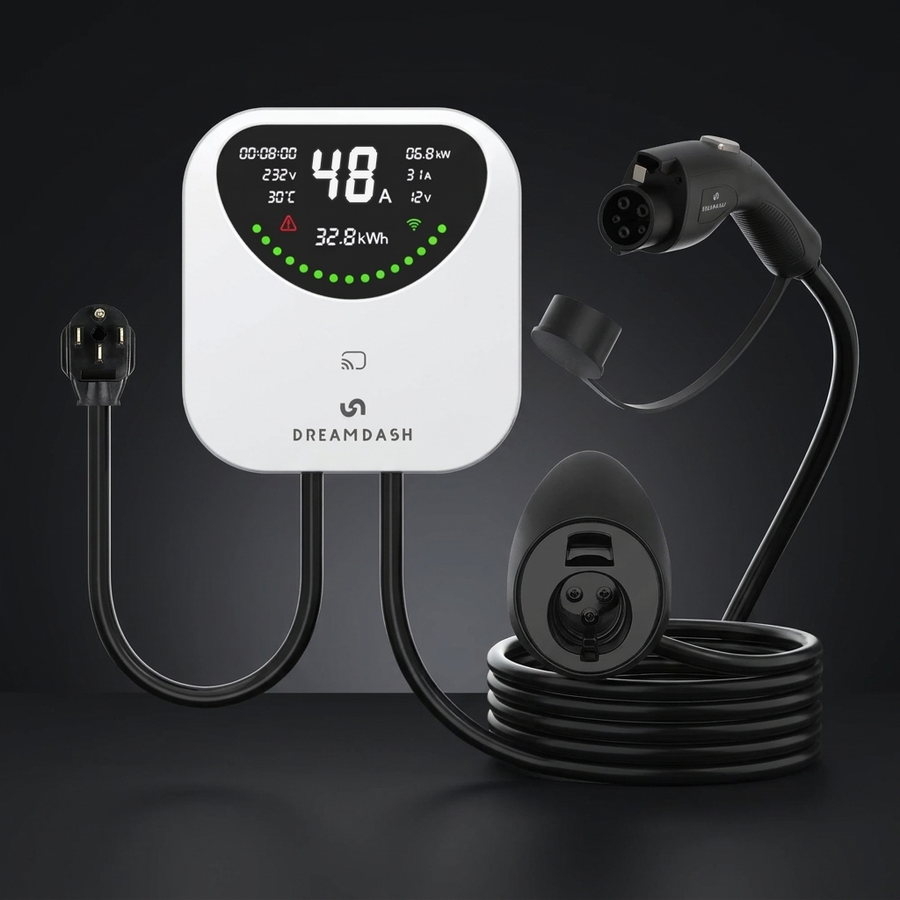
Plug into a standard outlet, at home or on the road. No installation needed.
Shop portable chargers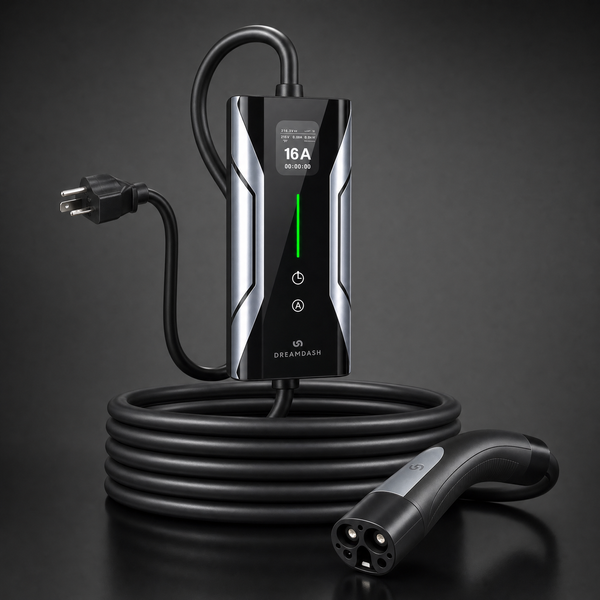
Everything EV owners ask before charging at home.
It comes down to two things: your car's charging port and the outlet you have at home.
Not sure which port you have? Use the Find your charger tool at the top of this page: pick your car and we show you the charger that plugs right in.
Level 1 uses a regular 120V wall outlet (NEMA 5-15). It's slow: about 3 to 5 miles of range per hour. Fine for a plug-in hybrid or very short commutes, but a full charge can take days.
Level 2 uses a 240V outlet (like a dryer or RV outlet) or a hardwired wall unit. It's 4 to 10 times faster, which means a full battery overnight for most EVs.
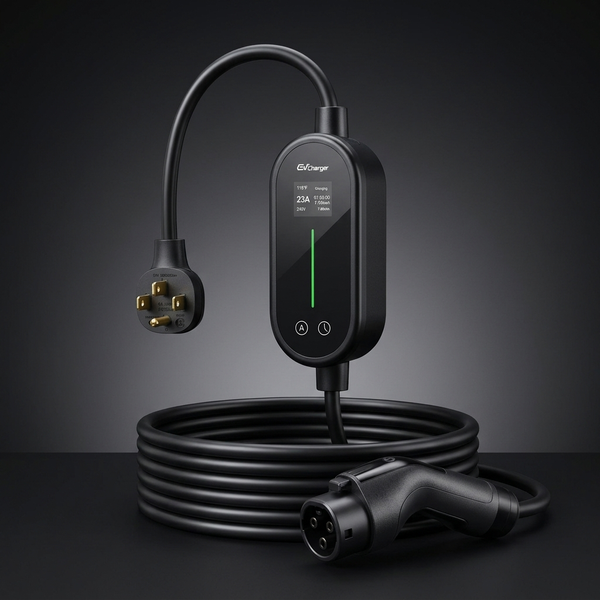
All three MyWatt chargers are Level 2. The 32A portable can also do Level 1 with its 5-15 plug, and the 16A comes with a 5-15 adapter, so you can charge from a standard outlet when you're away from home.
On a 240V outlet, here's what to expect (exact numbers depend on your car's efficiency and onboard charger):
| Charger | Power | Range added per hour |
|---|---|---|
| 16A portable | 3.8 kW | about 12 miles |
| 32A portable | 7.6 kW | about 25 miles |
| 48A wall charger | up to 11.5 kW | up to about 46 miles |
Most Americans drive under 40 miles a day. Even the 16A covers that in a single night.
Good to know: your car decides the maximum it can take. If its onboard charger is limited to 7.2 kW, a 48A charger will still charge it at about 7.2 kW.
EV charging is a continuous load, so US electrical code requires the circuit to be rated at least 125% of the charging current:
Already have a dryer or RV outlet in your garage? You may be good to go. If you need a new 240V circuit, have a licensed electrician install it. It's usually a few hours of work.
No, and this is the most important safety rule. A charger pulls high current for hours. Most extension cords aren't rated for that, so they heat up, melt the plug and can start a fire. Charger makers and electricians all agree on this one.
If your outlet is too far from where you park, our portable chargers come with a long cable (about 20 to 25 ft). If that's still not enough, the right fix is a new outlet closer to your parking spot, installed by an electrician.
Yes, with the right adapter.
Adapters work well, but a direct fit is always simpler. That's why our Find your charger tool shows you first the charger that plugs right into your car.
For daily driving, most automakers recommend setting a charge limit around 80%. It's easier on the battery over the years. Charge to 100% before a road trip.
Exception: cars with an LFP battery (some Tesla Model 3 and Model Y, for example) are often recommended to charge to 100% regularly. Check your owner's manual or your car's app.
And yes, it's perfectly fine to plug in every night. Your car stops charging by itself when it reaches its limit.
Simple math: kWh used × your electricity rate.
An average EV uses about 0.3 kWh per mile. At a typical US rate of around 17¢ per kWh, that's roughly 5¢ per mile, or about $1.50 to $2 for a 30-mile day. Compare that to $4 to $5 in gas for the same trip.
Save even more: many utilities offer cheaper night rates. Set your charging to start after the off-peak hour (in your car's app or with the charger's delay timer) and let it run while you sleep.
Yes, charging in the rain is safe. The charger doesn't send any power until it's securely connected to your car and has run its safety checks.
Our chargers are rated IP55 to IP65 (depending on the model) against dust and water jets. For a long life:
Questions before you order? Reach out through our contact page. A real person answers.
MYWATT started with Ryan and Brandon, two friends who saw how confusing home charging still was for most EV drivers. So we kept it simple: three chargers, carefully chosen, that just work. From a portable plug-in to a smart wall charger.

We don't list hundreds of products. We picked three chargers one by one, for US outlets (NEMA 5-15, 6-20, 14-50), US cars, and American winters and summers.
Built-in protection against over-current, over-voltage, ground faults and overheating. The charger only sends power once it's safely connected.
IP55 to IP65 weather protection, tough cables and rugged housings. Rain, snow or heat, it keeps charging.

We only sell chargers we'd plug into our own cars. That's why every MYWATT charger comes with a 3-year warranty and a 30-day money-back guarantee.
Got a question or an issue? You talk to a real person, and we make it right.


Customer reviews
Straight from EV drivers
Finally, a charger that works!
Michael R. , Austin, TX
Great value for the money
James T. , Dallas, TX
Makes life so much easier
Daniel W. , Miami
It's cool
Robert N. , Phoenix
Perfect for everyday use
Chris B. , Tampa, FL